
Guide to Northern Lights in Maine
How to see the Aurora Borealis in Maine, with a focus on Aroostook County and dark sky locations.
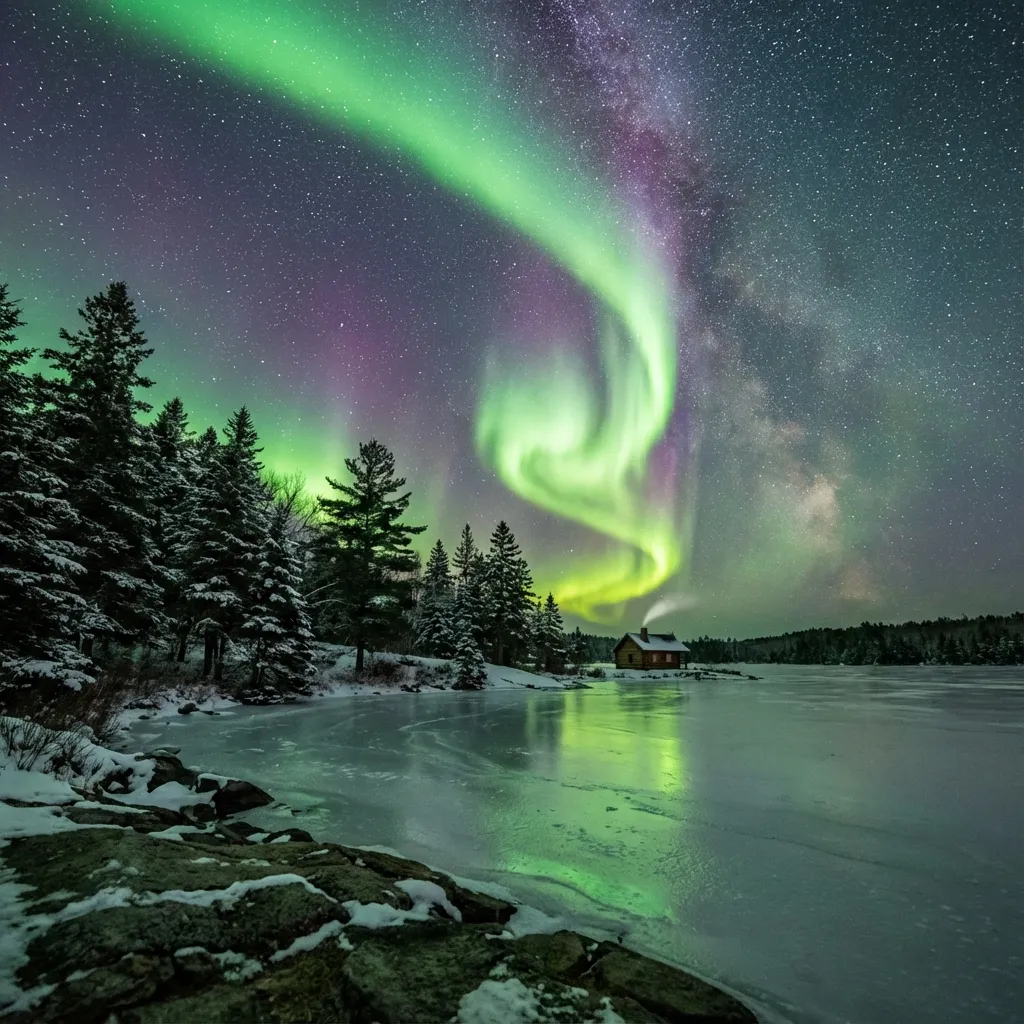
Maine is one of the few places in the continental United States where you can regularly see the Northern Lights (Aurora Borealis). With its northern latitude and low light pollution—especially in Aroostook County and the North Woods—Maine offers prime viewing conditions for this celestial spectacle.
Why Maine?
Maine’s geographic location places it closer to the magnetic north pole than most other states. The further north you go, the better your chances. Aroostook County, being the northernmost part of the state, is the undisputed king of aurora viewing in Maine.
Additionally, Maine has some of the darkest skies east of the Mississippi. The lack of light pollution allows the faint colors of the aurora to be visible to the naked eye.
Best Viewing Locations
Aroostook County (“The County”)
The vast, open landscapes of Aroostook County are ideal for skywatching. The agricultural fields provide wide horizons, and the light pollution is minimal.
- Aroostook National Wildlife Refuge (Limestone): Offers dark skies and open areas.
- Route 11: The stretch between Ashland and Fort Kent is known for its darkness and northern views.
- Public Lands: Any of the public reserved lands in the county will offer excellent dark skies.
- Other Key Locations: Caribou, Presque Isle, Houlton, Madawaska, Van Buren, and Mars Hill all offer excellent proximity to dark skies just outside their town centers.
Katahdin Woods and Waters National Monument
Designated as an International Dark Sky Sanctuary, this area offers some of the pristine night skies in the world. It is located just south of Aroostook County but offers similar viewing potential. Access points include Patten and Millinocket.
Moosehead Lake Region
While slightly further south, the dark skies over Moosehead Lake can provide a stunning backdrop for the aurora, especially with the reflection on the water. Greenville is the main hub, with dark skies easily accessible at Lily Bay State Park.
When to See Them
Season
The best time to see the Northern Lights is during the winter months (late September to March).
- Longer Nights: More hours of darkness increase your chances.
- Clear Skies: Winter air is often crisp and clear, though cloud cover can be an issue.
Solar Activity
The aurora is caused by solar activity. You need a “geomagnetic storm” for the lights to be visible.
- Solar Cycle: We are currently near the peak of Solar Cycle 25 (expected 2024-2026), meaning aurora activity is more frequent and intense.
How to Predict the Aurora
You can’t just go outside and expect to see them. You need to check the space weather forecast.
- Kp Index: This measures geomagnetic activity on a scale of 0-9. For Maine, you typically need a Kp of 4 or higher to see the lights on the horizon, and Kp 5-6 for them to be overhead.
- NOAA Space Weather Prediction Center: The official source for forecasts.
- Apps: Apps like “Aurora” or “SpaceWeatherLive” provide real-time alerts and viewing probabilities for your location.
Viewing Tips
- Look North: The aurora will appear on the northern horizon. Find a spot with a clear view to the north, unobstructed by trees or buildings.
- Get to Darkness: Even a little bit of city light can wash out the aurora. Go as far away from town centers as possible.
- Let Your Eyes Adjust: It takes about 20-30 minutes for your eyes to fully adjust to the dark. Put your phone away!
- Be Patient: The aurora is dynamic. It can flare up for 10 minutes and then fade away, only to return an hour later.
Photography Tips
To capture the aurora, you’ll need more than a quick snapshot.
- Tripod: Essential. You need long exposures (5-15 seconds).
- Manual Settings: Set your lens to manual focus (infinity). Use a wide aperture (f/2.8 or lower) and high ISO (1600-3200).
- Shutter Speed: Adjust between 5 and 20 seconds depending on the brightness of the aurora.
What to Expect
To the naked eye, the aurora often looks like a gray or faint green haze dancing on the horizon. Cameras are more sensitive to color and will often reveal vibrant greens, purples, and reds that the eye might miss. However, during strong storms, the colors are clearly visible and the lights can fill the entire sky.